
Pallet Changers
Swaps the pallet without moving the goods. Mobile, stationary and in-line solutions for industries where hygiene, pallet exchange or automated pallet flow is critical.
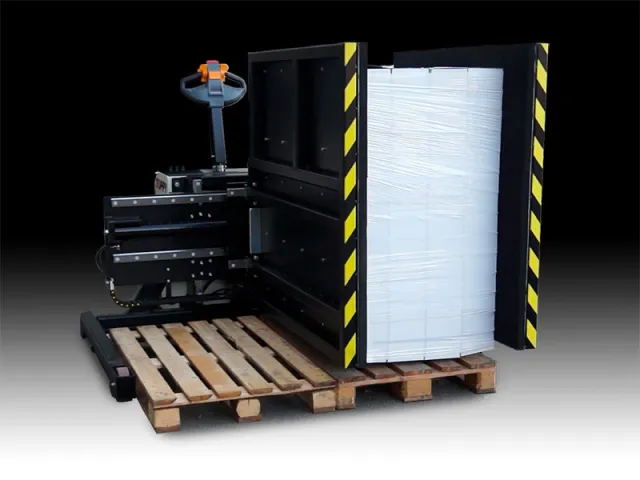
Mobile Pallet Changer with Side Shift Function
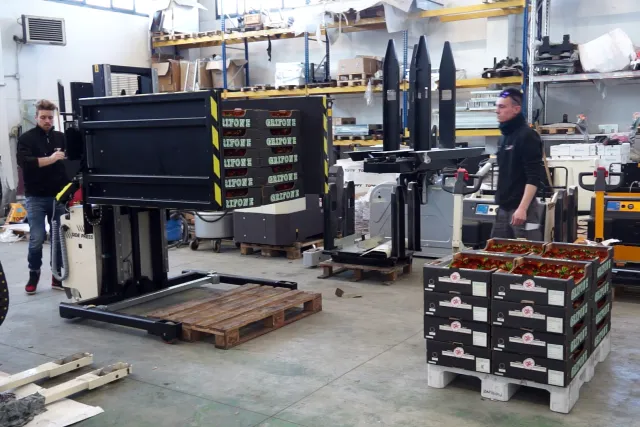
Mobile pallet changer with side press and split function Wide Base
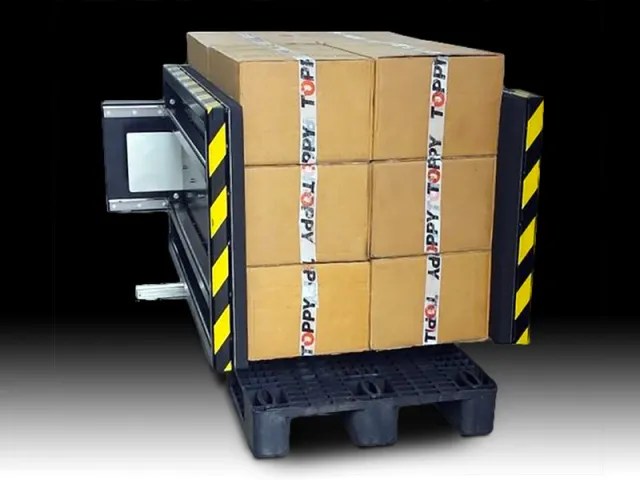
Mobile pallet changer with side press and lifting function
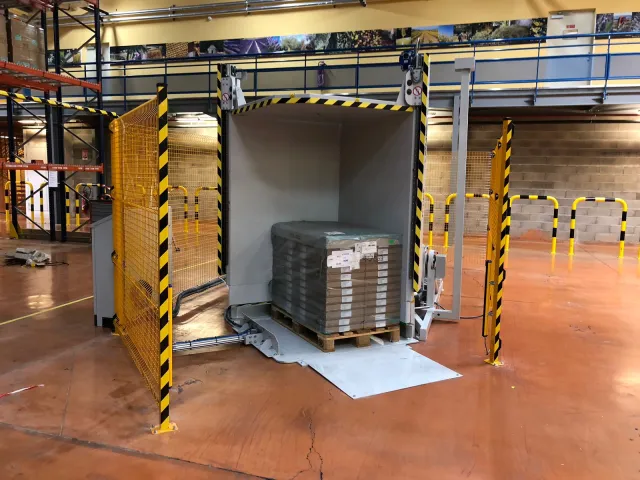
Pallet Changer V-Shape model for In-line solutions
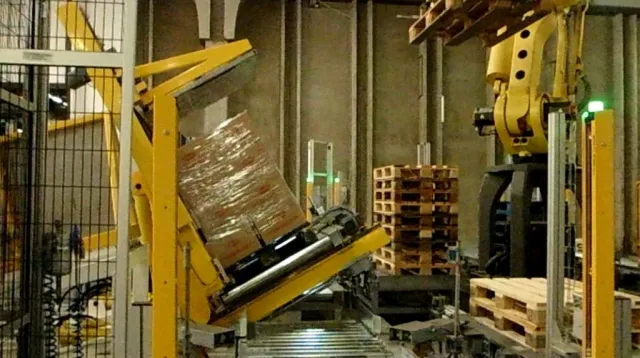
Pallet Changer L-Shape model, for In-line solutions. Pallet changed in under 1 minute
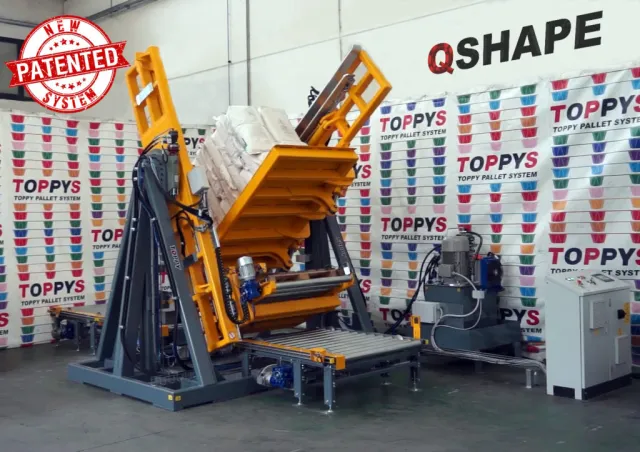
Pallet Changer Q-SHAPE In-line system. Efficient and fast pallet change. Space-saving
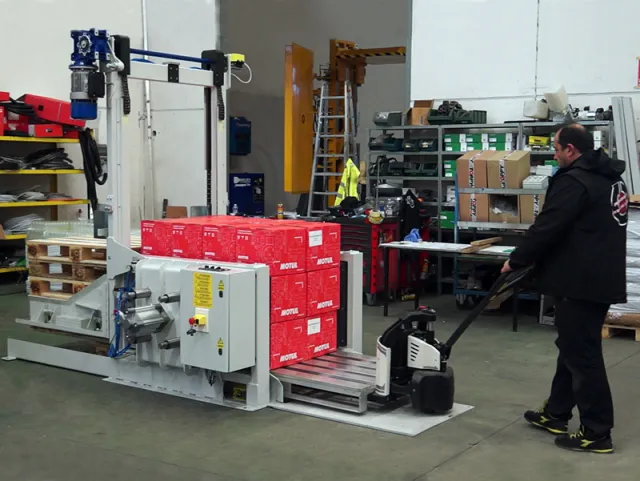
Stationary Pallet Changer "Toppy Easy Changer"
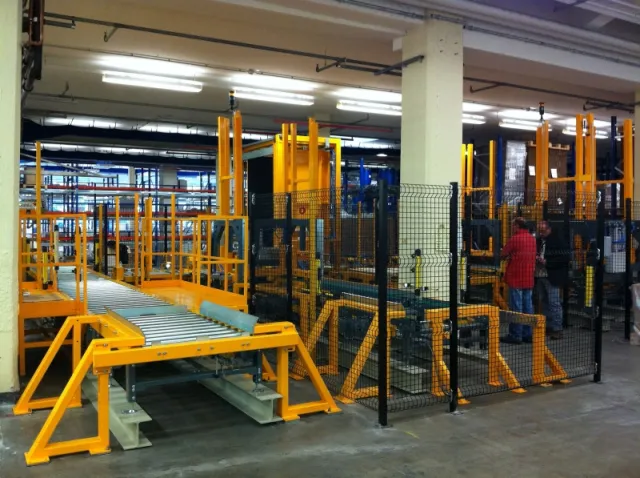
Pallet Changer Master Inverter for In-line Solutions and Fully Automatic
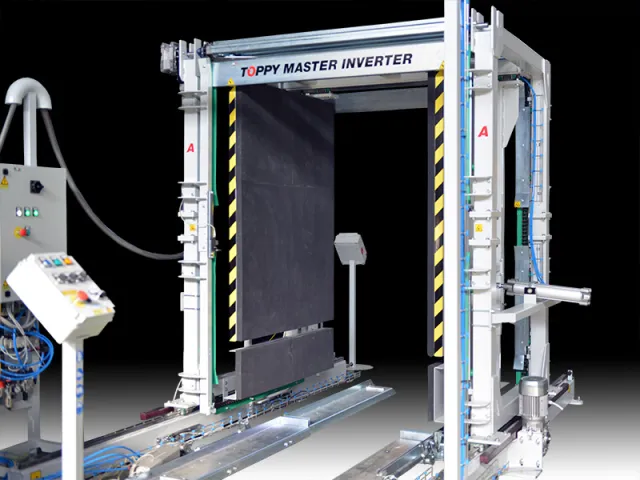
Pallet Changer "Master inverter" Stand alone model
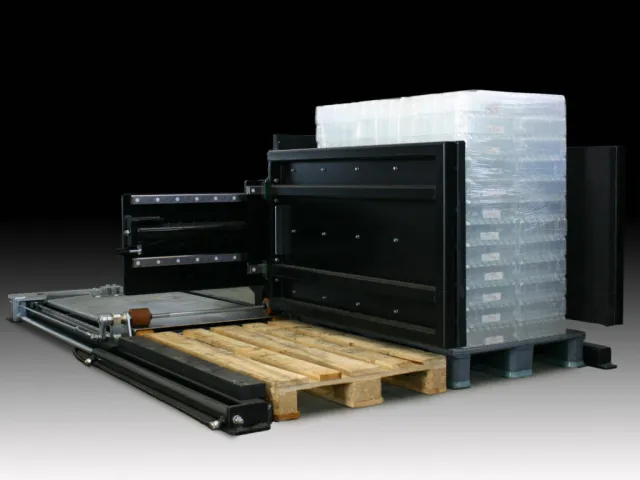
Pallet Changer model Side-Mover and Stand-alone
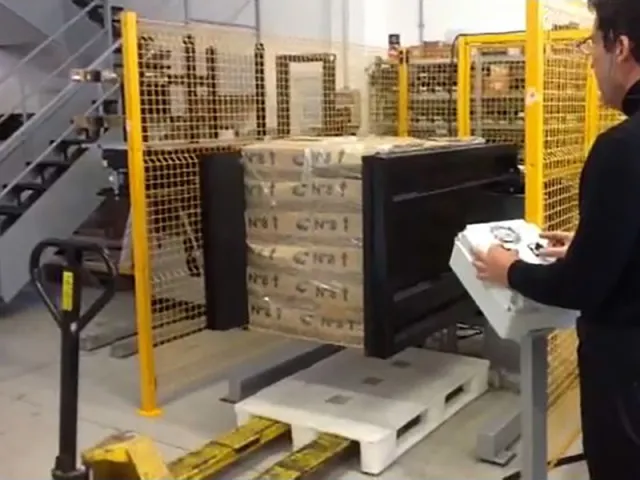
Stationary Pallet Changer with Side Clamp and Lift Function
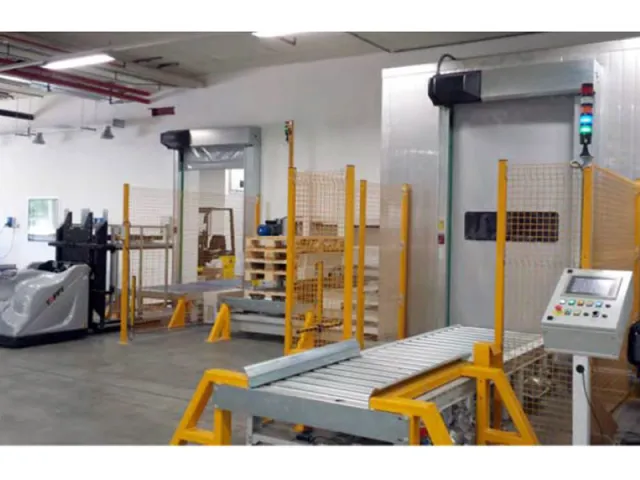
Pallet Changer In-line, with Dedusting Airlock and Film Wrapping on all 4 Sides of the Product
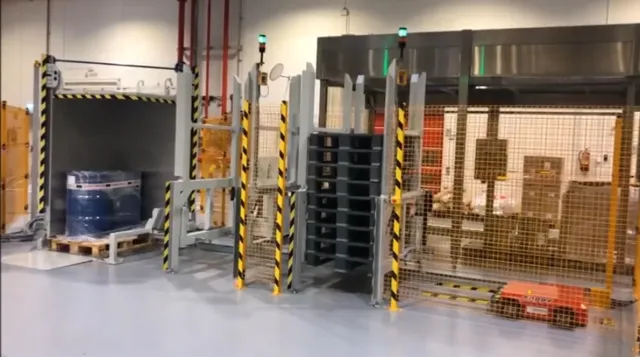
I-BEETLE for Pallet Handling on V-Shape Stand-Alone Pallet Changer
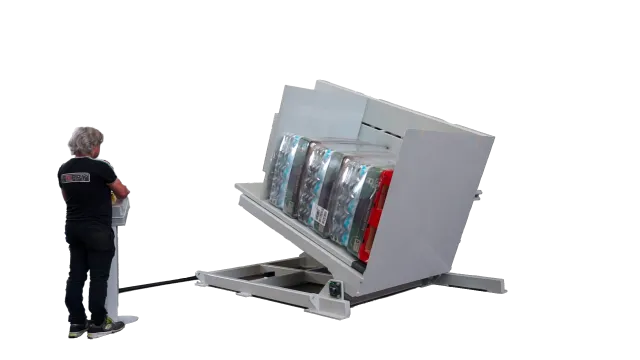
Pallet Changer L-SHAPE
More about pallet changers
A pallet changer lifts the entire palletised load free of the pallet and places it onto another, without touching the goods. It is the only way to swap a pallet when an unclean pallet must not enter a hygiene area, or when a damaged pallet needs replacing without manual handling.
In food, pharmaceutical and chemical industries, pallet changers are often mandatory. Wooden pallets carry mould, splinters and moisture, and rarely belong in cleanrooms or packaging zones. We supply equipment for both ad hoc swaps and fully automated pallet flow.
Pallet changer or pallet inverter?
The two machine types are often confused, but each solves a different task. A pallet changer swaps the pallet itself, while the goods stay in place. If the entire load needs to be rotated 180 degrees instead, for example to move the contents to a different pallet type or orientation, you need a pallet inverter. Many operating environments benefit from both.
Choose the type for your needs
Three main model types cover the vast majority of needs.
Mobile pallet changers are moved with a forklift and require no installation. Suited to lower volumes, flexible placement and setups where multiple zones share the same equipment. Cycle time of 30 to 60 seconds per pallet swap.
Stationary and in-line pallet changers are mounted in one place and handle high continuous throughput. The in-line variant sits in the conveyor belt and swaps the pallet automatically without an operator. It is the only type that genuinely supports more than 60 pallets per hour.
Used pallet changers are an option when the investment must be kept down, or when capacity needs to be expanded temporarily. All used machines are reconditioned and delivered with a service warranty.
What determines the choice
Volume per hour, pallet type (EUR, half pallet, plastic), maximum weight and hygiene requirements determine the model selection. Should goods be clamped from the side or lifted from above? Should the pallet be swapped manually or automatically? We review your flow before we recommend a solution, and our service covers all of Denmark.
Contact us for an obligation-free meeting about your pallet flow.